09.12.2025: Verena Haring (Graz): Divergent historical management impacts present-day Grassland communities across the former Austrian-Hungarian Empire, HS 31.11, Institut für Biologie, Bereich Pflanzenwissenschaften, Schubertstraße 51, 17:00 Uhr
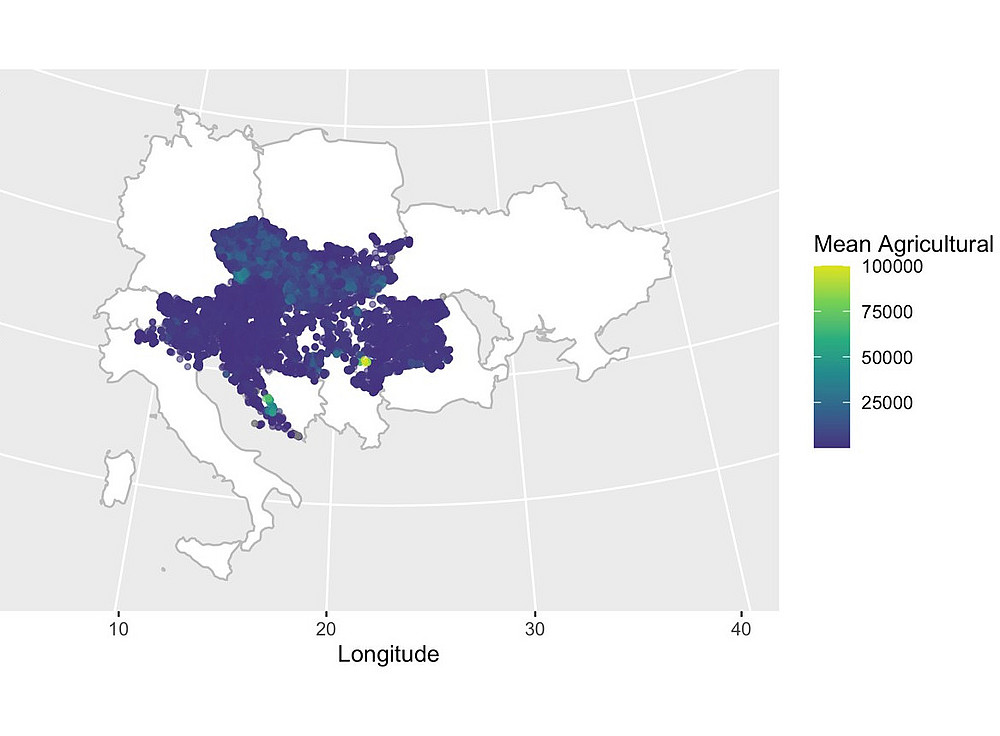
Grasslands in Central Europe harbor high species diversity and constitute over a third of European agricultural sites. These ecosystems fell under the severe impacts of land-use intensification and collectivization policies in the 20th century, which led initially similar landscapes follow divergent trajectories, affecting their agricultural field size and structure. These sudden land use changes turn border regions into valuable sites for studying impacts of landscape structure and management on grasslands plant communities. Understanding how historical management strategies affected grassland biodiversity is therefore crucial for conservation efforts. To assess the impacts of large-scale landscape change on these systems, we analyze historical vegetation data from the European Vegetation Archive (EVA) across the historical extent of the Austrian-Hungarian Empire, as well as present-day data from the border region of Austria and Czech Republik. Our results suggest that collectivization negatively affected biodiversity at small scales, but increased diversity at larger scales. That relationship is reversed at the Austrian Czech border, which can be linked to the differences in conserved areas and industrialization. In summary, this dataset gives valuable insights into the development of initially similar grasslands communities impacted by collectivization policies in Central Europe, which deepens our understanding of plant diversity change over the last century.