

03.06.2026: Carlos ARELLANO (Univ. Wien): „Spatial ecology of microbes - the role of spatial structure
in microbial interactions", HS 02.11, Institut für Biologie, Bereich Zoologie, Univ.-Platz 2, 13:15 Uhr
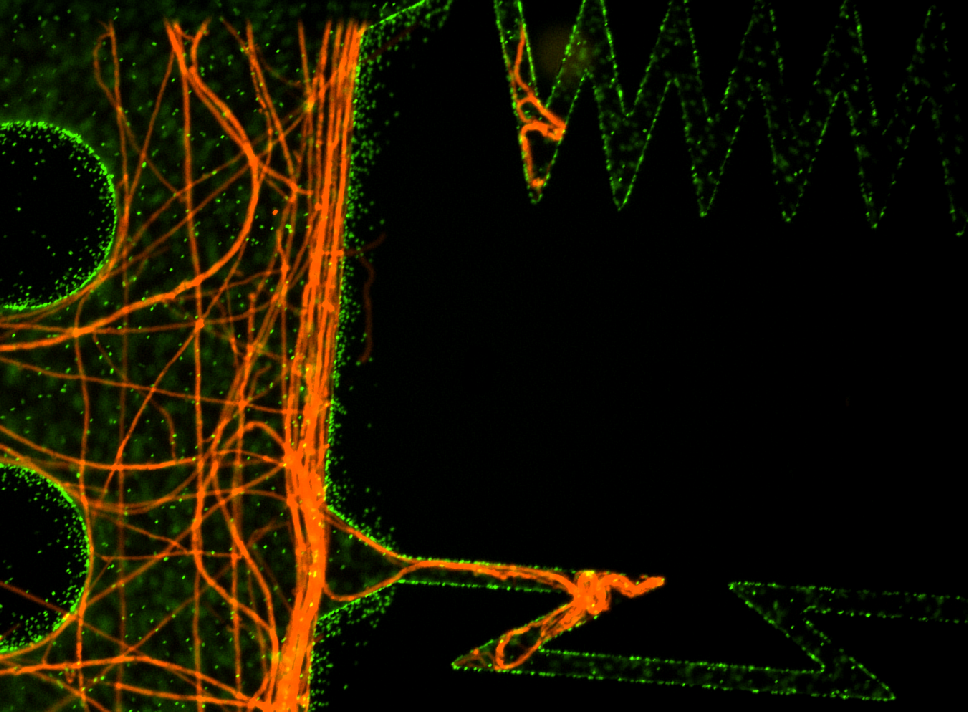
Microbial diversity is essential for the functioning of microbial ecosystems. Losing such diversity leads to dramatic imbalances and eventual loss of microbiomes, resulting, for example, in desertification, reduction of carbon stocks, and loss of aboveground ecosystems, in soils, to health complications, such as inflammatory diseases, obesity, and neurological disorders, in the human gut. Yet, when assayed in the lab, most of the microbes present in microbiomes cannot coexist and diversity and functions are quickly lost. Considering the immense importance of microbial diversity in maintaining microbiome functions, we know remarkably little about how it is maintained in nature. Spatial structure of microbiomes has been proposed as a mediator of these interactions, permitting the coexistence of mutually exclusive microbes. Yet, this hypothesis has not been systematically tested because microbiome processes occur at small spatial and temporal scales and are obscured by microbiomes’ own intricated matrices. In my lab, we use a novel combination of a microfluidic methodological framework together with mathematical modeling to resolve the fundamental question of how microhabitat spatial structure mediates microbial interactions and drives diversity in microbiomes. Such empirical and modelling approach provides an integrated view to understand the fundamental way spatial structure drives microbial diversity in microbiomes. Our aim with this cross-disciplinary set of techniques is to generate essential insights to preserve and recover microbiome diversity across all types of environments, from soils to the human gut.