


14.04.2026: Adam Clark (Graz): „Impacts of observation error on estimates of vegetation dynamics and biodiversity change", HS 32.01, Institut für Biologie, Bereich Pflanzenwissenschaften, Holteigasse 6, 17:00 Uhr
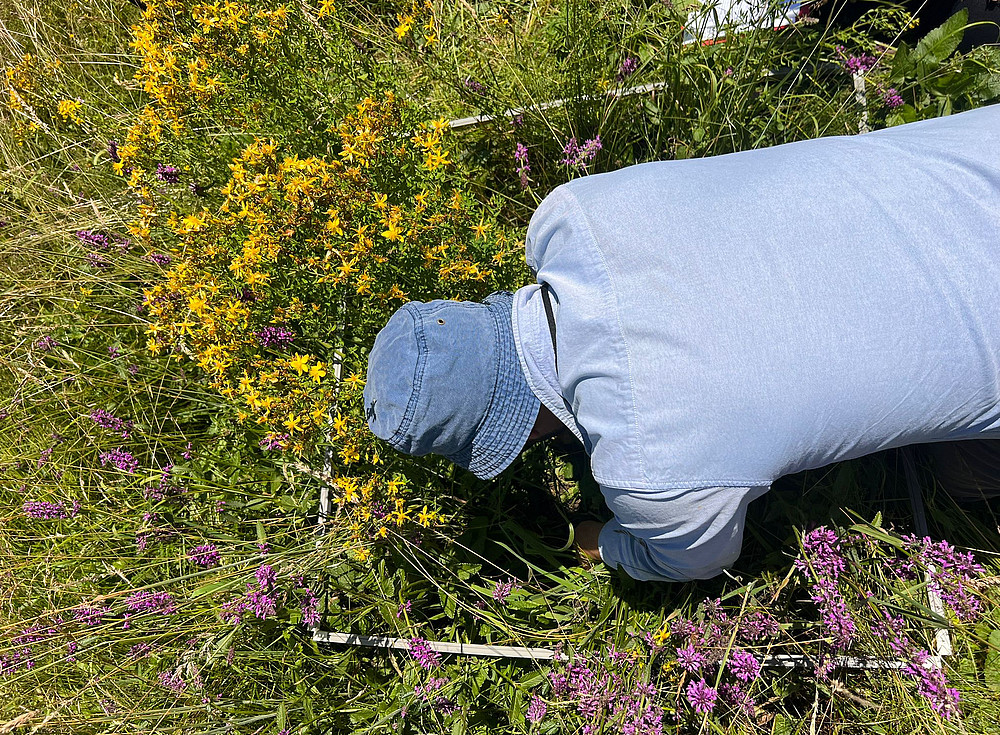
Cover-based vegetation surveys are subject to high rates of observation error, both in terms of species identities, and their abundances. These errors can lead to inaccurate estimates of community composition and species abundances, and have the potential to bias estimates of biodiversity change. Here, I present results from a multi-site test of observation error rates in surveys of herbaceous vegetation cover, spanning 25 locations and three continents from the Nutrient Network. In each site, plots were resurveyed multiple times, with times between resurveys ranging from a few hours to just over a week. We then assesses differences between repeated resurveys to quantify error rates for observations of species-level cover and species identity. Finally, we used these error rates to simulate hypothetical scenarios of species loss and species gain, and computed the resulting biases in estimates of alpha diversity change and temporal beta diversity, measured in terms of species richness, Shannon diversity, and Simpson diversity. Findings indicate that certain metrics (in particular, aggregate estimates of community-level cover, diversity, and alpha diversity change) are relatively robust to observation error, whereas others (e.g. species-level cover, presence of individual rare species, and beta diversity) are biased even by moderate observation error. We note that these biases could at least partially explain why many studies of local-scale biodiversity change fail to find significant average directional trends in alpha diversity, and report high temporal beta diversity. Our results also demonstrate how maximum likelihood techniques could be applied to quantify and ameliorate these biases in future analyses.